
As I was savoring a bowl of creamy risotto on a rainy evening, I couldn’t help but think how a simple dish could wrap me in such warmth and comfort. That’s when I decided to elevate the classic with a Japanese twist, creating a Japanese Style Risotto with Seared Salmon that boasts robust flavors of miso and a sweet soy glaze. In just 40 minutes, you can impress family and friends with this quick, crowd-pleasing dinner that transforms everyday ingredients into a delightful feast. The rich umami from the shiitake mushrooms combines perfectly with the tender, flaky salmon, making it a comforting option that’s far from ordinary. Ready to dive into this delicious creation that’s sure to become a favorite in your home? Let’s cook!
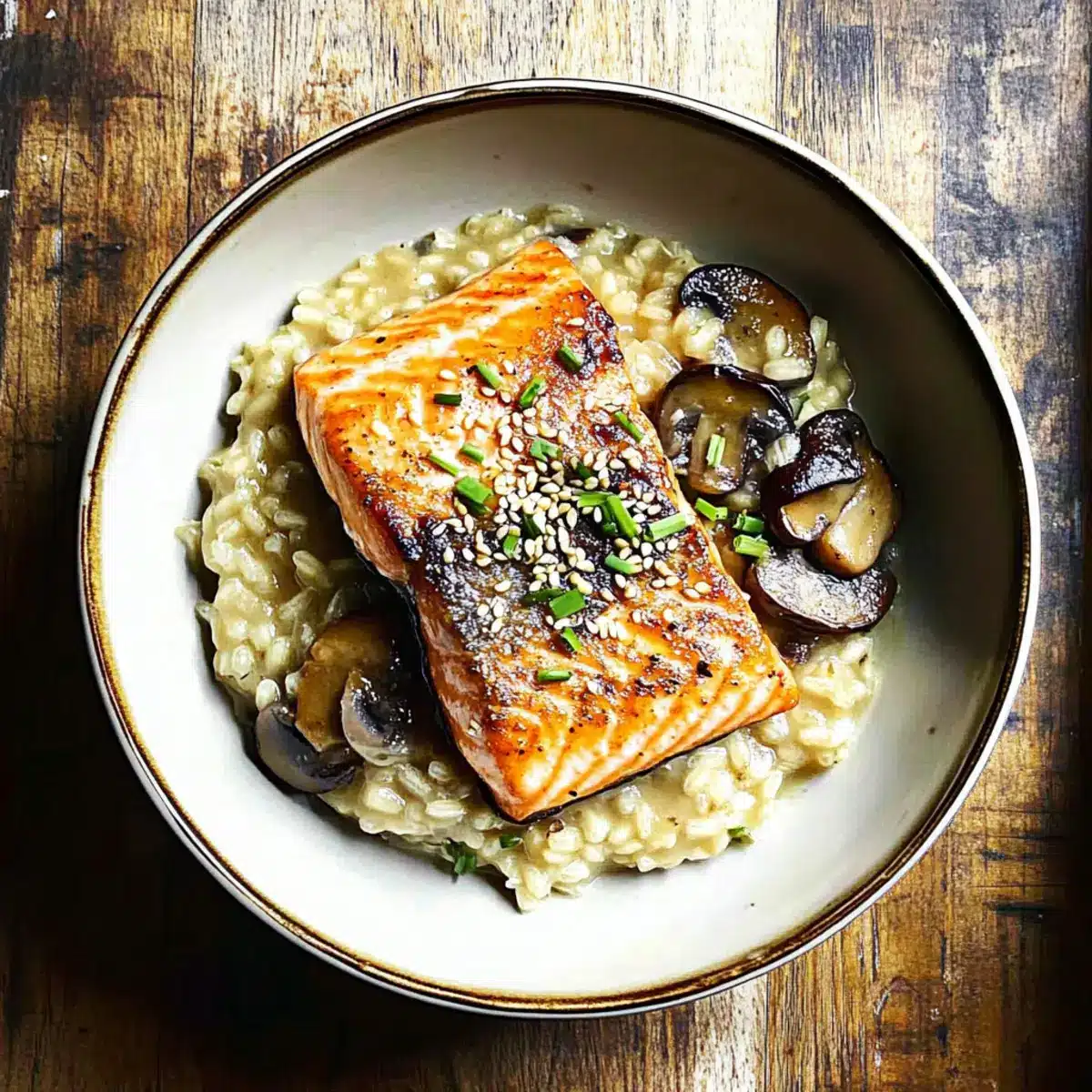
Why is this risotto a must-try?
Quick and Easy: This scrumptious risotto can be whipped up in just 40 minutes, making it an ideal choice for those busy weeknights.
Umami Explosion: The combination of miso and shiitake mushrooms brings a uniquely rich flavor profile that you won’t find in traditional risottos.
Crowd Pleaser: Perfect for dinner parties or cozy family meals, your guests will be impressed with this gourmet dish that’s deceptively simple to make.
Versatile Options: Feel free to swap out types of mushrooms or incorporate vibrant greens like bok choy for an added burst of color and nutrition.
Comfort Food Redefined: With its creamy texture and tender seared salmon, this dish offers a comforting experience that stands out from ordinary fare.
If you’re into seafood or easy-to-make meals, you’ll want to check out my Pan Fried Salmon and Salmon Rice Bowl recipes for more inspiration!
Japanese Style Risotto Ingredients
• Discover the essential components to make a delicious Japanese Style Risotto with Seared Salmon.
For the Risotto:
- Olive Oil – Essential for cooking and caramelizing flavors; sesame oil can enhance the dish when substituted.
- Shiitake Mushrooms – Deliver earthy flavors and a meaty texture; cremini mushrooms can be used as an alternative.
- Low Sodium Soy Sauce – Adds a salty umami touch to the risotto; you can use tamari to keep it gluten-free.
- Yellow Onion – Brings natural sweetness and depth; shallots make a fine, milder substitute.
- Celery Stalk – Provides a crunchy freshness; leeks serve as another great option for flavor.
- Garlic Clove – Enhances aroma and taste; garlic powder can work in a pinch.
- Rice (Sushi Rice or Arborio) – The creamy base for the risotto; it’s best to avoid long-grain rice.
- Dry White Wine/Sake – Adds acidity and depth; using extra broth keeps it alcohol-free.
- Hot Chicken Broth – Infuses moisture and flavor, enriching the risotto; vegetable broth works for a vegetarian version.
- White Miso Paste – Enhances creaminess and adds umami flavors; substitute with tahini for dietary restrictions.
- Black Pepper – Adds a pop of seasoning; feel free to use fresh herbs for variety.
- Chives – Brighten the dish visually and add a mild onion flavor; scallions can be used instead.
- Sesame Seeds – Provide delightful crunch and visual appeal; crushed peanuts can be a fun substitute.
For Seared Salmon:
- Low Sodium Soy Sauce – Imparts flavor and moisture in the marinade; tamari can make it gluten-free.
- Dry White Wine – Enhances the marinade’s flavor; omit for a simpler version, or use broth instead.
- Brown Sugar – Balances the saltiness of soy sauce with sweetness; honey or maple syrup work well as alternatives.
- Skinless Salmon Fillets – The star protein of the dish; feel free to substitute with trout if desired.
- Unsalted Butter – Adds richness when searing the salmon; ghee serves as a great dairy-free option.
Step‑by‑Step Instructions for Japanese Style Risotto with Seared Salmon
Step 1: Marinate the Salmon
In a shallow dish, whisk together ¼ cup of low sodium soy sauce, 2 tablespoons of dry white wine, and 1 tablespoon of brown sugar until the sugar dissolves. Add the skinless salmon fillets, coating them well in the marinade. Allow the salmon to marinate for at least 30 minutes, turning occasionally, while you prepare the risotto.
Step 2: Prepare the Shiitake Mushrooms
In a heavy-bottomed pot, heat 1 tablespoon of olive oil over high heat. Add 1 cup of torn shiitake mushrooms and sauté them until they release their moisture and begin to brown, about 5 minutes. Once caramelized, stir in 1 tablespoon of low sodium soy sauce for an additional flavor boost, then remove the mushrooms from the pot and set them aside.
Step 3: Sauté the Aromatics
Lower the heat to medium and add another tablespoon of olive oil to the same pot. Add 1 diced celery stalk, 1 chopped yellow onion, and 2 minced garlic cloves. Sauté for about 2 minutes, or until the vegetables are softened and fragrant, stirring frequently to avoid burning. This mixture will serve as the flavorful base for your Japanese Style Risotto.
Step 4: Toast the Rice
Stir in 1 cup of sushi rice or Arborio rice into the pot, allowing the grains to toast for about 1 minute. Pour in ½ cup of dry white wine or sake, and scrape the bottom of the pot to deglaze it, mixing in any flavorful bits. Continue to let it simmer for approximately 2 minutes until the wine is nearly absorbed, preparing the rice for the broth.
Step 5: Cook the Risotto
Gradually add 4 cups of hot chicken broth to the rice, about ½ cup at a time, and stir constantly. Allow each addition to be absorbed before adding more—this process should take 15 minutes. Once the rice is al dente, fold in the sautéed shiitake mushrooms and 2 tablespoons of white miso paste dissolved in a bit of hot broth, continuing to cook for an additional 5 minutes until creamy.
Step 6: Sear the Salmon
In a skillet, heat 1 tablespoon of olive oil and 1 tablespoon of unsalted butter over medium-high heat. Once hot, place the marinated salmon fillets in the skillet, cooking for about 4 minutes on each side until they are caramelized and cooked through. The salmon should be golden brown and flake easily with a fork, elevating your risotto dish.
Step 7: Assemble and Serve
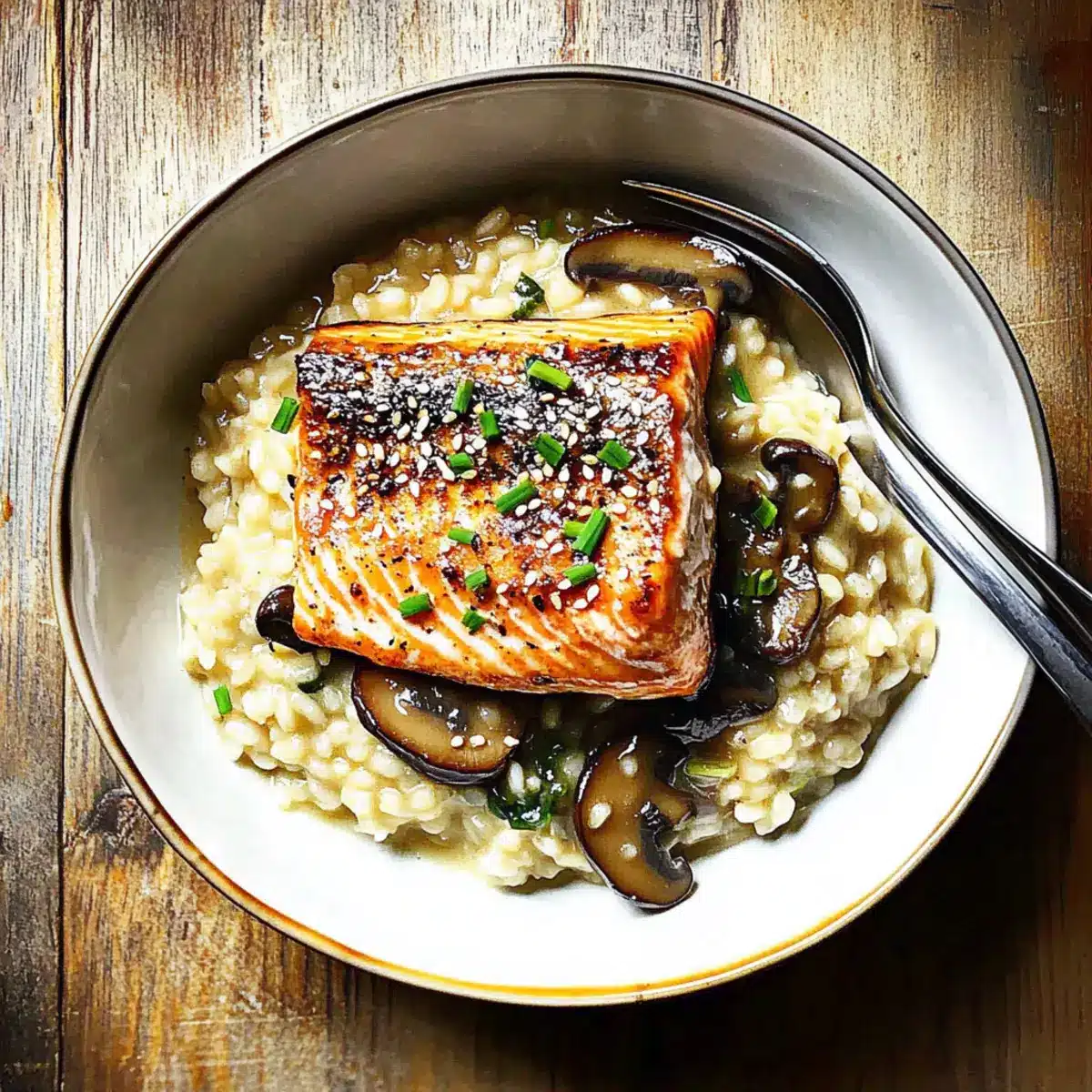
To serve, plate a generous portion of the creamy risotto and place a seared salmon fillet on top. Garnish with freshly cracked black pepper, chives, and a sprinkle of sesame seeds for extra texture and a pop of color. Your Japanese Style Risotto with Seared Salmon is now ready to delight your taste buds!
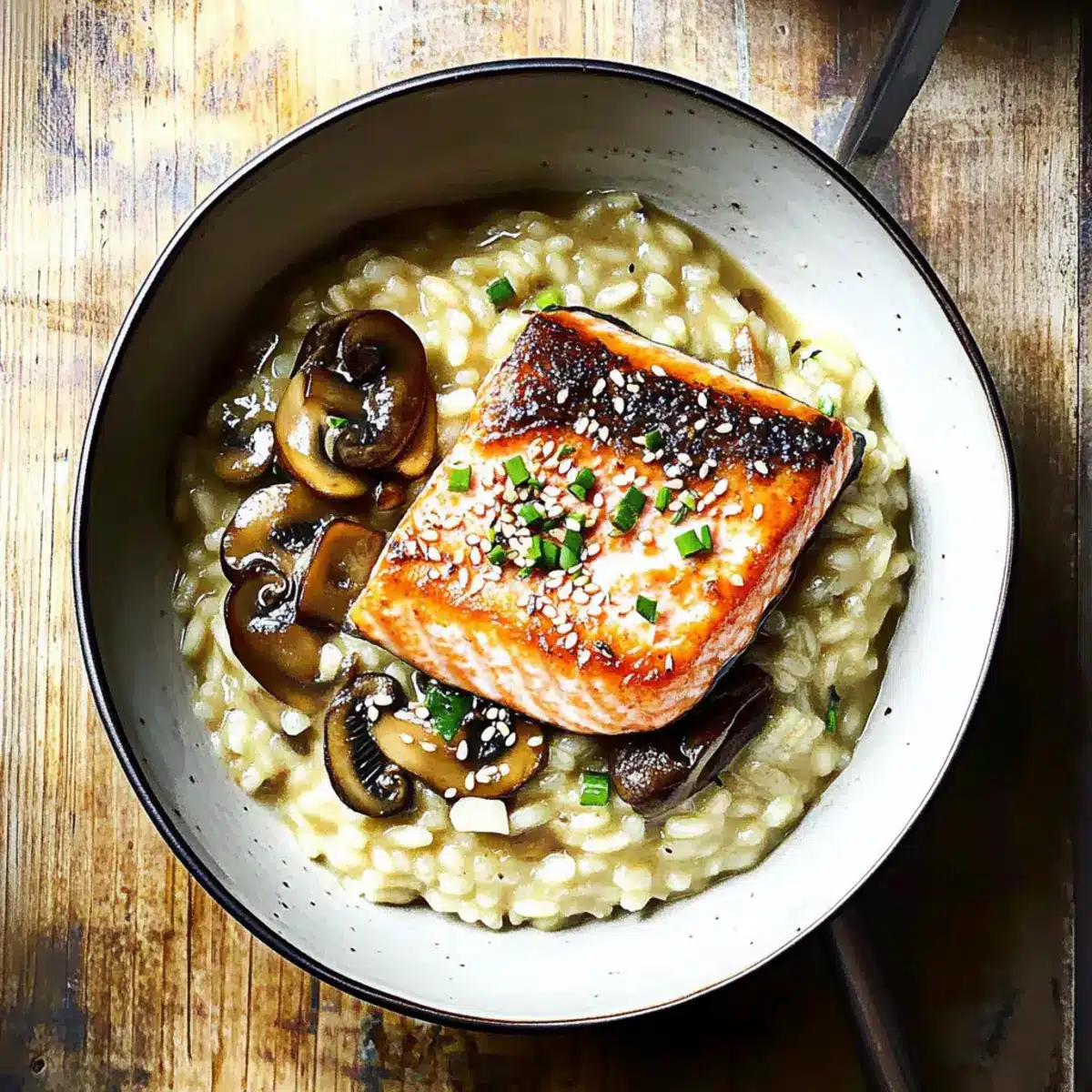
Expert Tips for Japanese Style Risotto
-
Quality Ingredients: Use fresh ingredients to elevate your Japanese Style Risotto. High-quality shiitake mushrooms and broth enhance the overall flavor significantly.
-
Continuous Stirring: Stir the risotto constantly for a creamier texture. This releases starch from the rice, creating that signature risotto creaminess everyone loves.
-
Watch the Broth: Be mindful of the sodium content in your broth and soy sauce. Opt for low sodium versions to prevent the dish from becoming overly salty.
-
Perfect Salmon Sear: Ensure your skillet is hot before adding salmon. This prevents sticking and encourages a beautiful crust without overcooking the inside.
-
Customize Your Toppings: Feel free to experiment with garnishes! Fresh herbs or a drizzle of sriracha can add a delightful twist to your dish.
What to Serve with Japanese Style Risotto with Seared Salmon
Elevate your dining experience with delightful accompaniments that match the enticing flavors of this comforting dish.
-
Crispy Tempura Vegetables: The light, crunchy texture complements the creamy risotto beautifully. A burst of freshness balances the richness of the salmon.
-
Miso Soup: This soothing bowl of miso soup enhances the Japanese theme, offering a warm, savory backdrop to your meal that perfectly ties it all together.
-
Steamed Edamame: Tender, slightly salty edamame makes for a delightful finger food. Its fresh burst provides a lively contrast to the lush risotto.
-
Pickled Ginger: A zingy addition that cleanses the palate between bites, bringing a bright acidity that contrasts the umami flavors in the rice and salmon.
-
Cucumber Salad: A refreshing salad with a light vinaigrette adds a crisp, crunchy element that balances the dish’s creaminess. Toss in sesame seeds for added texture and flavor.
-
Saké or Crisp White Wine: Pair with a chilled glass of saké or a crisp Sauvignon Blanc. These beverages complement the dish’s flavors while enhancing the overall dining experience.
Mix and match these pairings to create a symphony of textures and flavors that elevate your Japanese Style Risotto with Seared Salmon to a culinary masterpiece.
Japanese Style Risotto Variations
Feel free to explore delightful twists and substitutions that can make this risotto uniquely yours!
-
Mushroom Swap: Replace shiitake with crimini, button, or portobello mushrooms for different flavor profiles. Each variety brings its own charm, so don’t hesitate to experiment!
-
Herbs and Greens: Add a handful of fresh cilantro or basil for a lively touch, or stir in vibrant bok choy or spinach for a pop of color and nutrition. These additions elevate both flavor and presentation!
-
Spice It Up: Want some heat? Drizzle sriracha on top or mix in red pepper flakes for a spicy kick that awakens the palate.
-
Gluten-Free: Use tamari instead of soy sauce to keep this dish gluten-free while enjoying the same umami flavor. It’s a simple swap that ensures everyone can enjoy this meal.
-
Vegan Delight: Opt for vegetable broth and replace the butter with olive oil or vegan butter for a delightful plant-based version. You won’t sacrifice flavor while accommodating dietary needs!
-
Creamier Texture: Stir in a splash of coconut milk while cooking the risotto for added creaminess and a subtle tropical hint. It’s a heartwarming twist that adds depth to every bite.
-
Alternative Proteins: If salmon isn’t your thing, substitute with skinless chicken breast or tofu. Both options offer delightful alternatives that can soak up the miso and soy flavors beautifully.
If you’re inspired to create a flavorful dinner, check out my Salmon Rice Bowl for another exciting option that’s sure to impress!
Storage Tips for Japanese Style Risotto with Seared Salmon
- Fridge: Store leftover risotto in an airtight container for up to 3 days. Keep the salmon separate, as it can become soggy when mixed.
- Freezer: For longer storage, freeze risotto without the salmon in a freezer-safe container for up to 2 months. Let it cool completely before sealing.
- Reheating: To reheat risotto, add a splash of broth or water and warm slowly on the stovetop, stirring frequently for a creamy texture. Reheat salmon in a skillet over low heat to maintain its tenderness.
- Tip: For best results, consume the Japanese Style Risotto with Seared Salmon fresh; freezing may alter the creamy texture of the risotto.
Make Ahead Options
These Japanese Style Risotto with Seared Salmon are perfect for busy home cooks looking to save time! You can prepare the risotto base (without the seared salmon) up to 24 hours in advance. Simply follow steps 1 through 5, allow the risotto to cool, and then refrigerate it in an airtight container. For the salmon, marinate it and keep it in the fridge for up to 3 days before cooking. When you’re ready to enjoy, simply reheat the risotto gently over low heat, stirring in a little extra broth if needed for creaminess, and sear the marinated salmon just before serving for a freshly cooked experience. This way, you’ll have a delicious, comforting meal with minimal last-minute effort!
Japanese Style Risotto with Seared Salmon Recipe FAQs
What should I look for when selecting shiitake mushrooms?
When selecting shiitake mushrooms, look for firm, smooth caps without dark spots or excessive moisture. Fresh mushrooms will have a pleasant earthiness and should feel heavy for their size. Avoid those with wrinkled caps or slimy surfaces, as they may be past their prime.
How do I store leftover Japanese Style Risotto with Seared Salmon?
Store any leftover risotto in an airtight container in the fridge for up to 3 days. It’s best to keep the salmon separate to maintain its texture. Make sure to cool the risotto completely before refrigerating, avoiding any condensation that might make it soggy.
Can I freeze Japanese Style Risotto?
Absolutely! To freeze risotto, allow it to cool completely, then transfer it to a freezer-safe container or resealable bag. It can be kept in the freezer for up to 2 months. For best results, avoid freezing the salmon alongside the risotto to maintain quality when reheating.
What if my risotto is too thick?
If your risotto turns out too thick, don’t worry! Simply add a splash of hot chicken broth or water while stirring over low heat until you reach the desired creamy consistency. The starches in the rice should help bind the mixture, but extra liquid will help loosen it up nicely.
Is this dish suitable for those with soy allergies?
For those with soy allergies, you can easily modify this recipe. Instead of low sodium soy sauce, use coconut aminos, which provide a similar flavor without soy. Alternatively, using a homemade broth with plenty of flavor can ensure your dish remains delicious without the soy component.
How long does it take to marinate the salmon?
Marinate the salmon fillets for at least 30 minutes to allow the flavors to penetrate. However, if you have more time, marinating for up to 2 hours in the fridge can enhance the flavor even more. Just remember to bring it back to room temperature before cooking for even cooking!
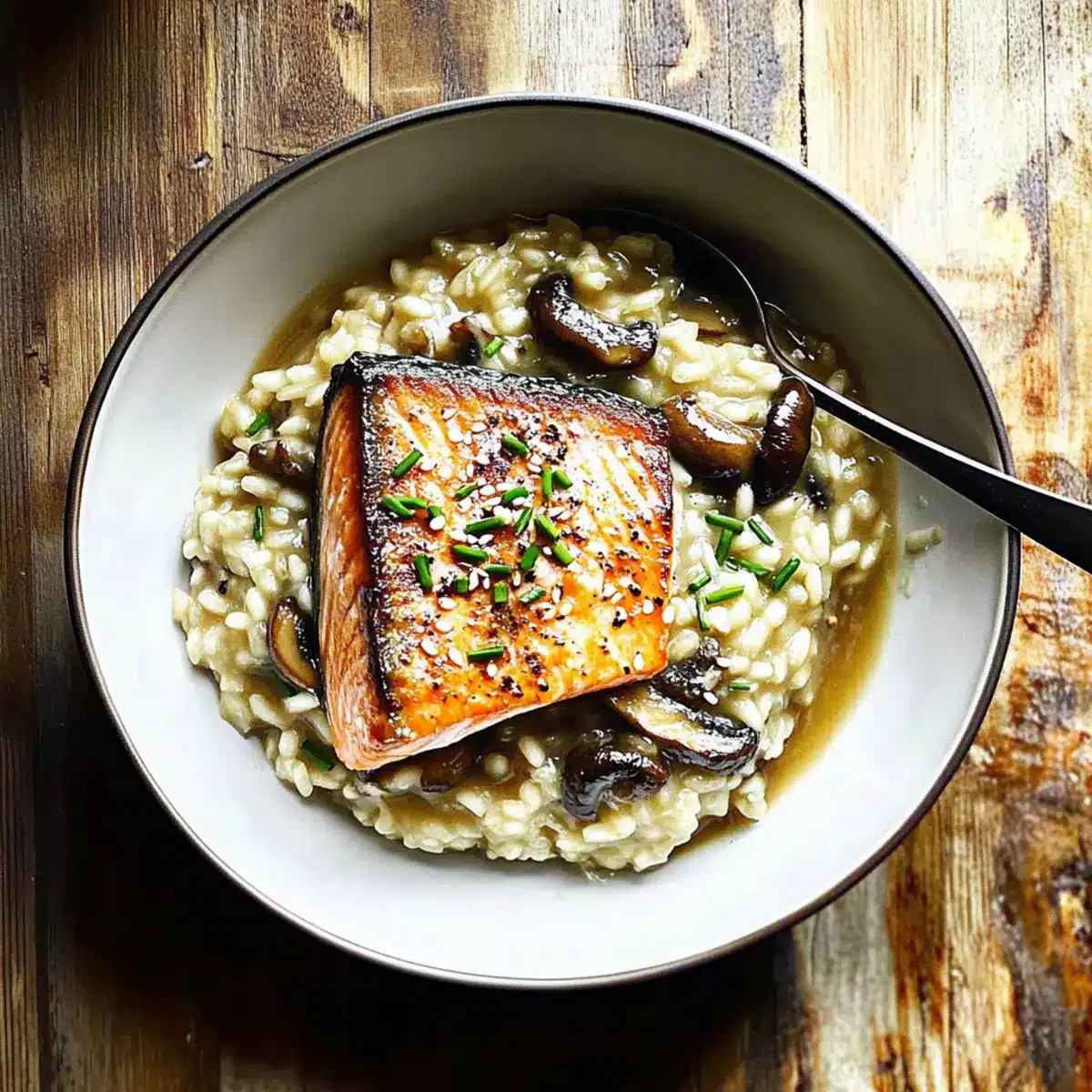
Japanese Style Risotto with Seared Salmon for Comforting Nights
Ingredients
Equipment
Method
- In a shallow dish, whisk together ¼ cup of low sodium soy sauce, 2 tablespoons of dry white wine, and 1 tablespoon of brown sugar until the sugar dissolves. Add the skinless salmon fillets, coating them well in the marinade. Allow the salmon to marinate for at least 30 minutes, turning occasionally, while you prepare the risotto.
- In a heavy-bottomed pot, heat 1 tablespoon of olive oil over high heat. Add 1 cup of torn shiitake mushrooms and sauté them until they release their moisture and begin to brown, about 5 minutes. Stir in 1 tablespoon of low sodium soy sauce for an additional flavor boost, then remove the mushrooms from the pot and set them aside.
- Lower the heat to medium and add another tablespoon of olive oil to the same pot. Add 1 diced celery stalk, 1 chopped yellow onion, and 2 minced garlic cloves. Sauté for about 2 minutes, or until the vegetables are softened and fragrant.
- Stir in 1 cup of sushi rice or Arborio rice into the pot, and toast for about 1 minute. Pour in ½ cup of dry white wine, scraping the bottom to deglaze it. Let it simmer until the wine is nearly absorbed, about 2 minutes.
- Gradually add 4 cups of hot chicken broth to the rice, about ½ cup at a time, stirring constantly. Once the rice is al dente, fold in the sautéed shiitake mushrooms and 2 tablespoons of white miso paste dissolved in a bit of hot broth, continuing to cook for an additional 5 minutes until creamy.
- In a skillet, heat 1 tablespoon of olive oil and 1 tablespoon of unsalted butter over medium-high heat. Place the marinated salmon fillets in the skillet, cooking for about 4 minutes on each side until golden brown.
- To serve, plate a portion of the creamy risotto and place a seared salmon fillet on top. Garnish with freshly cracked black pepper, chives, and sesame seeds.
Leave a Reply